
The year 2025 unfolded as a paradox for the global VFX and post-production industry- a blend of slowdown and stability, breakthroughs and bottlenecks, pressure and progress. While some studios navigated a challenging content recession, others expanded globally, acquired new companies, or delivered on landmark films and series.
The latest Ficci-EY report titled, “Shape the future: Indian media and entertainment is scripting a new story” revealed that the animation, VFX and post-production segment contracted by nine percent, reaching Rs 103 billion in 2024.The VFX segment recorded a 14 per cent decline in 2024.
Across the board, one theme emerged loud and clear: the industry is reshaping itself, and 2026 may well be the year that rebuilds and accelerates. To understand the views of the industry and get a sneak peak of their year’s performance, AnimationXpress got in touch with the heads of various companies.
The year at a glance and milestones achieved
For many Indian studios, 2025 was a stark reminder of the shifting global content economy. According to philmCGI co-founder and managing director Anand Bhanushali, the year was “tough overall,” with a dip in international service work and reduced budgets across OTT and feature films. Domestic VFX provided some respite, but “overall, it has been a year of de-growth,” he said. Studios, he noted, are now racing to build AI-driven workflows to survive.
Also, philmCGI’s VFX artistry in the film Homebound garnered a nine-minute standing ovation at the Cannes Film Festival.
FutureWorks had a very different trajectory- 2025 was dynamic and diverse, with strong partnerships across streaming and theatrical clients. “We contributed to a diverse slate of projects including Kohrra Season 2, Kesari: Chapter 2, Fallout Season 2, and Freedom at Midnight 2, along with several other global and domestic productions. Our collaborations remained wide-ranging, and we continued to support both long-standing clients and new partners,” shared Futureworks CEO and founder Gaurav Gupta.
If one studio defined expansion in 2025, it was Phantom Digital Effects. Calling it a “very successful and important year,” Phantom Digital Effects CEO and founder Bejoy Arputharaj shared how they worked on several big global and Indian projects, and also strengthened their company through major acquisitions.
This year they consolidated the studio into a unified global creative collective, Phantom Media Group (PMG). This milestone followed the recent addition of Milk and Lola Post to the group’s expanding award-winning brand roster, which already included Tippett Studio, PhantomFX, and Spectre Post.
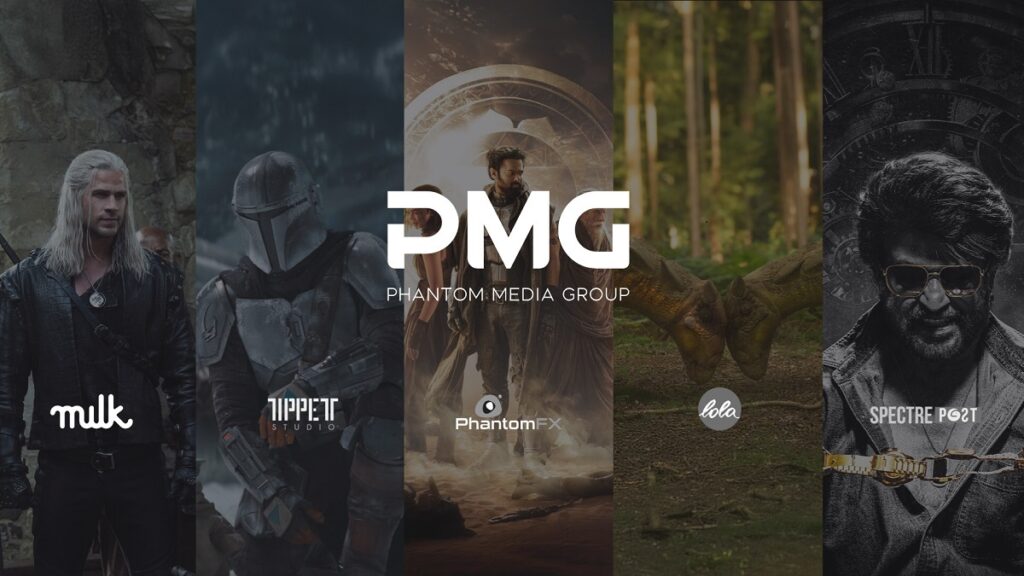
Some of the key projects PMG worked on include: Saare Jahan Se Achcha, Kantara 2, Varanasi, The Mandalorian & Grogu, Ironheart, Good Omens, The Witcher, Star Wars: Skeleton Crew, Alien Romulus, and many other major titles.
For Outpost VFX Mumbai, 2025 marked a significant rebound from the disruptions of previous years.
“We were fortunate to have a lot of shows running through some of the quieter periods at the end of 2024 while the market was still catching up following the strike disruption. Then into the start of 2025 we had a raft of new projects land alongside an encouraging amount of returning business,” noted Outpost VFX Mumbai creative operations head Rutvij Barot.
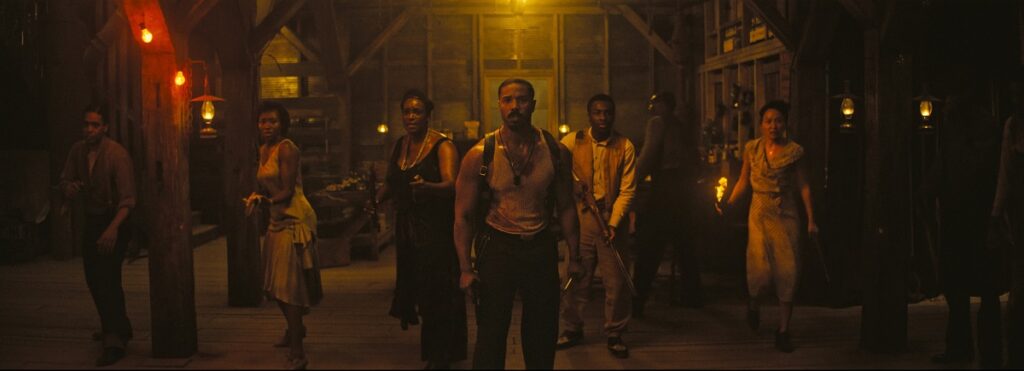
Their creative highlights over the last year have included working on Wicked: For Good, Sinners, It: Welcome to Derry and Foundation. Outpost VFX has four studios in three countries – two in the UK, one in Canada’s Montreal and their team in India’s Mumbai.
Industrial Light & Magic (ILM) Mumbai executive in charge Kiran Prasad noted that this year “proved highly successful” in terms of collaboration on a range of projects. These included major titles such as The Lost Bus, Jurassic World: Rebirth, Percy Jackson and the Olympians, The Acolyte, The Amateur, Severance, Twisters, The Running Man, and Lilo & Stitch, and the highly anticipated 2026 release, The Mandalorian and Grogu, among others.
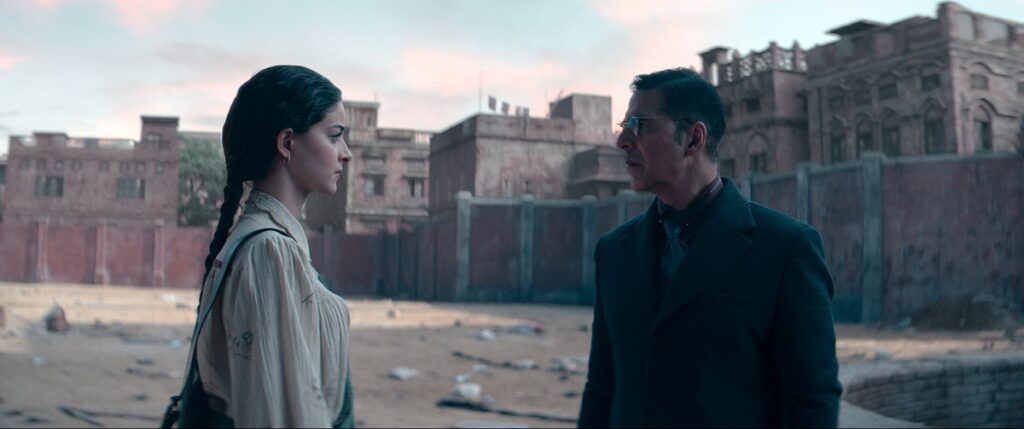
Charting a decade-long journey, Assemblage Entertainment has achieved impressive milestones, solidifying its position as a powerhouse in the animation industry. They had recently ventured into the VFX space with its CGI sequence on Rocketry: The Nambi Effect, the directorial debut of actor R Madhavan. In 2025, the studio added another feather to its hat as one of the major VFX partners delivering prominent sequences in the historical drama Chhaava.
“The lion sequence was a beast, literally and figuratively! Bringing a digital lion to life with such hyperrealism and intensity took months of work and an unwavering vision from the film’s director Utekar. We started with extensive research on the Asiatic lion, studying its anatomy, physical attributes, movements, and behaviour to ensure absolute authenticity. We iterated this till it met the director’s vision,” Assemblage Entertainment CEO Arjun Madhavan shared had shared earlier.
Their work on Chhaava and other features strengthened their position in the Indian film space, earning us Best VFX Film at the VAM Awards by Animation Xpress. This was also a standout year for recognition overall: as they were named Studio of the Year, along with multiple leadership and craft honours.
Observations and trends witnessed this year
Across studios, one consistent observation emerged that the budgets tightened, and both domestic and international markets slowed down.
Bhanushali noted that platforms and film studios cut back spending, forcing companies to rethink scale and value.
With five global studios in San Francisco, Mumbai, Vancouver, London, and Sydney, ILM witnessed a noticeable upturn in the industry, with production volumes increasing both internationally and within India. “The sector is experiencing a resurgence in confidence following the economic slowdown of 2024. This renewed optimism is supported by improved government incentives globally, as well as specific proactive policy measures in India. The Indian government is now actively formulating policies and designing incentives, recognising the sector’s significant potential for job creation and revenue generation,” noted Prasad.
A defining transformation of 2025 was the deep integration of AI and ML in VFX workflows:
- PMG saw AI improve production efficiency by 15 to 20 per cent, particularly in asset creation, de-aging, face replacement, and repetitive tasks.
- FutureWorks observed broader adoption of real-time, virtual production, machine learning and AI-assisted workflows.
- Outpost VFX approached AI as an enhancement tool, maintaining an “artisanal lens” to ensure creative control stays with artists and supervisors.
Studios highlighted sustained demand for high-quality streaming content on platforms like Netflix, Amazon, Disney+, BBC, and Hotstar. According to Arputharaj, Europe’s tax incentives made it a rising hotspot for VFX production. Cross-continental collaboration grew, especially for studios with global footprints.
Barot mentioned that they were still witnessing a gradual recovery in the film and episodic markets. He felt that the market was still not at peak content levels that was prior to the shutdown that happened although for Outpost, 2025 has been busy.
Navigating challenges & finding solutions
Bhanushali noted that at the moment, the major challenge is to sustain a studio as the margins are negligible and most of the studios here are in survival mode. He elaborated that studios have invested in AI and are working on workflows that can help them reduce service cost and they will see the effects in 2026-27.

On the other hand, Futurework had to navigate evolving technology, shifting market demands, and tighter delivery timelines. They addressed these by streamlining their internal pipelines and strengthening collaboration across teams and partners.
PMG’s primary challenges were integrating operations across the USA, UK, Europe, China, and India while managing market fluctuations and tightening delivery timelines. They quickly aligned their tools and pipelines globally, strengthened their structure by bringing in dedicated marketing and sales team members across regions, and introduced a shared Learning Management System to help artists collaborate and exchange knowledge.
Talking about existing market instability, Barot shared that it wasn’t really before summer of 2025 that they started to see shoots really pick up after two or more years of disruptions and false starts, and that obviously has a huge knock-on effect in post.
Way forward: what 2026 holds for the VFX world
With around 120 artists across offices in Pune and Thrissur, philmCGI is looking forward to the new year. They see some signs of revival in the markets as more projects get commissioned domestically and internationally, but realistically that will take place from mid 2026 onwards.
Futureworks anticipates continued growth in high-end streaming, more global cross-border work, and further integration of new technologies. For them, the focus remains on delivering world-class work, deepening partnerships, and staying agile as the industry evolves. They continue to operate with a robust, multidisciplinary team across our six offices (globally), which remain their key post-production, VFX, and camera rental service hubs.
PMG is entering 2026 with a powerful global pipeline. With new acquisitions fully integrated and AI workflows maturing, the studio expects all regions to grow strongly. PMG now operates with 700+ employees across several global hubs, with studios located in Chennai, Mumbai, Hyderabad, and Bengaluru in India, along with their presence in China. In Europe, we operate out of London, Barcelona, Bordeaux, and Dublin, and we also have strong North American bases in Berkeley, Los Angeles, and Canada. Together, these locations form one unified global creative technology network.
Outpost VFX Mumbai is witnessing a lot of exciting shows finally getting greenlit and moving into prep for shoots in the first half of the year, so they are all hoping for another strong year here with plenty of challenging shows in their roster. They expect another robust year, driven by cloud-led efficiencies and the “One Outpost” global integration philosophy.
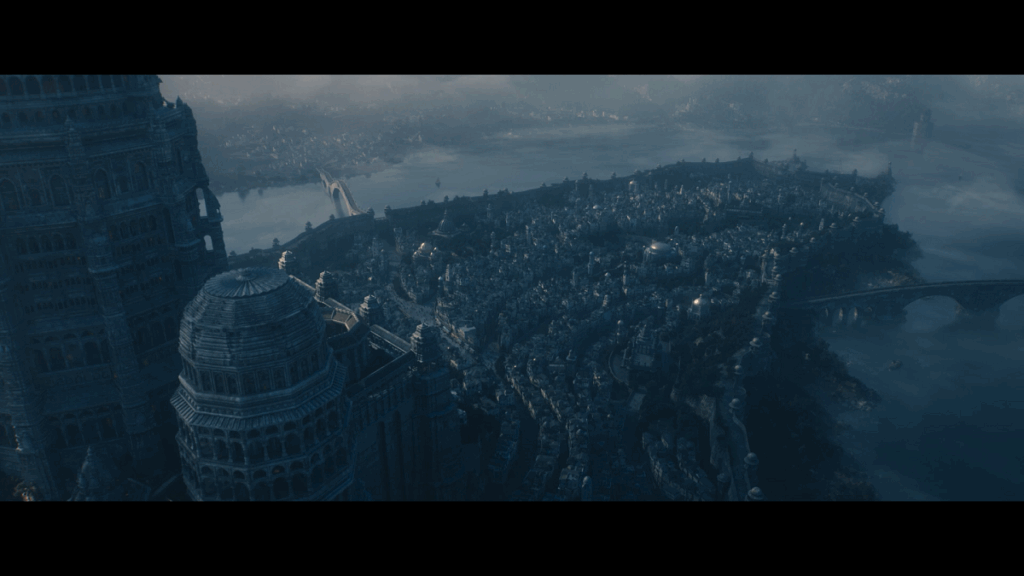
ILM sees 2026 as a year of expanding job opportunities and rising investment in machine learning and AI upskilling- reflecting a maturing, future-ready industry.
According to Assemblaage Entertainment, 2026 is shaping up to be a year defined by clarity over speed. For them, the focus is on scaling in a way that feels intentional, strengthening our animation and VFX slate, refining their real-time and stylised workflows, and choosing projects where they can add genuine creative value.
“We’re entering the year with a broader global footprint and more integrated teams, but equally with the awareness that sustainable growth requires discipline, not just ambition,” they shared.
The year 2025 may not have been the industry’s most prosperous year, but it was undeniably transformational. Studios recalibrated, consolidated, upgraded, and prepared for a new era of technology-driven creativity.
The story of VFX is shifting from survival to reinvention, and Indian studios are standing firmly in the middle of that evolution.


