
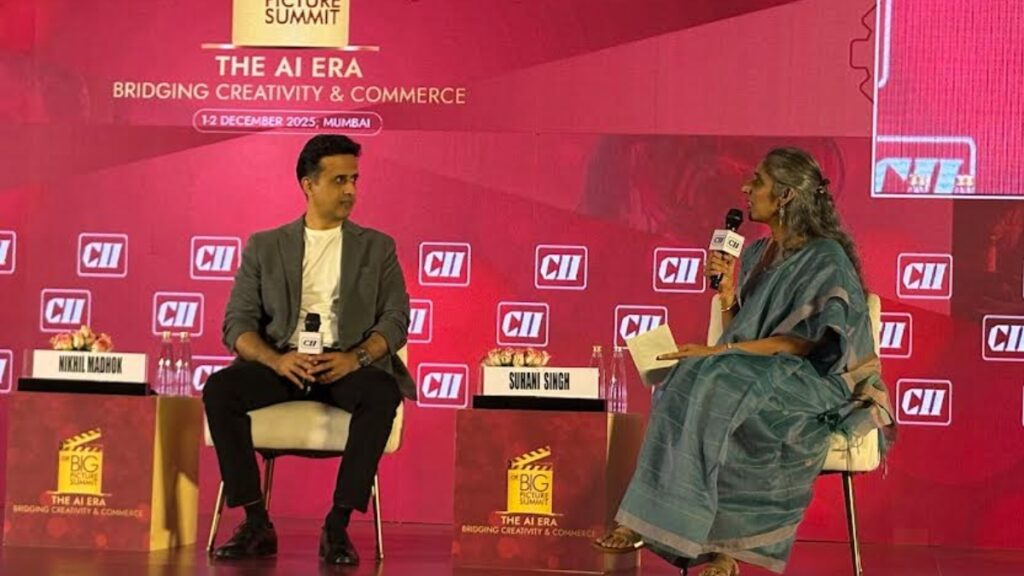
At the recently concluded CII Big Picture Summit 2025, Prime Video India senior leadership director and head of originals Nikhil Madhok took the stage for a session titled “Prime Video and the Next Frontier of India’s Entertainment Revolution.” In this conversation with India Today Magazine deputy editor Suhani Singh he reflected on the evolving streaming landscape, scoping out the stories and genres currently missing, while highlighting Prime Video’s commitment to authentic storytelling, and new creative voices.
Underlining Prime Video’s growth trajectory in India since the inception of streaming in the country to now, Madhok said, “This is probably the phase of the maximum amount of growth that we (Prime Video) have been seeing, and there are several signals to that – in the last one year, nearly 25 per cent of the people who streamed content on Prime Video have been completely new to the service. Second, the number of shows, movies, unscripted shows, and regional content that we are going to greenlight or have greenlit, and going to launch over the next 12 to 18 months, is the highest ever that we have done since our inception in India. We have over 100 originals in various stages of negotiation, development, and production. Not just that, we have also started producing films for theatrical premieres. And we are also experimenting a lot with genres.”
When questioned about the genres that work and how streaming in its early days was dominated by crime thrillers, he spoke about the significant creative shifts underway. He noted that young audiences have always consumed a wide range of genres, but the creators earlier found thrillers easier to structure for binge viewing. Over time, however, greater confidence has enabled more layered and emotionally resonant storytelling. Giving examples of Original series such as Panchayat, Gram Chikitsalay, and Dupahiya, he also highlighted the resurgence of rooted Indian narratives, as well as the rise of female-led, female-oriented stories like Khauf.
On being asked about the streaming service’s greenlighting process, Nikhil offered an open look into the process. He noted that while the service receives 500–600 pitches a month, only a limited number can move forward. What does not work are pitches driven solely by a desire to fit a brief rather than a genuine creative urge.
Madhok challenged the misconception that stories need star power to be greenlit, stating, “We are not looking to cast big names, we’re looking to cast great talent.”
Responding to Singh’s question on how the streaming service continues to develop big franchises such as The Family Man, Paatal Lok, Panchayat, and Mirzapur, he emphasised the rigour behind sustaining successful IPs. “Creating a successful tentpole IP is difficult, but I think it’s even tougher to sustain it and make it grow,” he noted, stating that in many cases, new seasons have brought in three to four times the audience of earlier seasons.
Madhok reflected on the power of storytelling but noted the absence of a true-blue Indian superhero. Rather than adapting western ideas, he pointed to India’s rich culture and mythology as inspiration for a homegrown hero on streaming one that could become the next big phenomenon and inspire audiences.
