
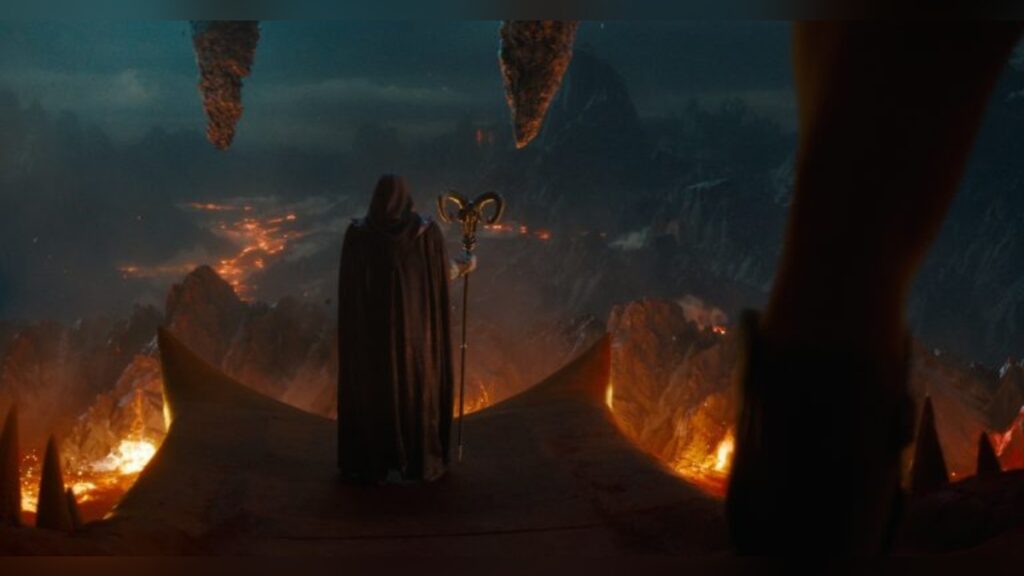
Picture this. Nicholas Galitzine’s lean frame starts to swell. Bones shift. Tendons pull tight. Veins rise under skin that thickens in real time. Tiny body hair catch the light. One continuous visual hit that takes the character from everyday bloke to the most powerful man in the universe.
That is just one of the sequences Industrial Light & Magic’s London and Mumbai teams pulled off for Amazon MGM Studios’ Masters of the Universe. Across 18 months, they delivered 793 of the film’s 2,180 visual effects shots. Beast Man. Half of Skeletor. He-Man’s full transformation. Subternia. Snake mountain.
David Vickery, production visual effects supervisor and creative director of ILM’s Mumbai studio, has the Bafta and VES awards, the Oscar nomination for Harry Potter and the Deathly Hallows – part two, and a CV that runs through the Jurassic World films and Mission: Impossible – Rogue Nation. Here he walks through the choices that made the fantasy feel solid enough in a conversation with AnimationXpress’ Pooja Raj Thakkar.
- On the biggest creative challenges across the whole project
A deeper VFX breakdown is particularly valuable with Masters of the Universe because the project gave us several sequences where the creative and technical challenges were very different. Across the film, there were 2,180 visual effects shots delivered by six vendors, with ILM’s London and Mumbai studios handling 793 shots over 18 months.
What made the project particularly interesting was that each character required us to think differently about performance and technique. We weren’t applying one solution across the board. We had to understand what each character needed and then develop the right approach around that.
For example, He-Man’s transformation was entirely digital, while with Beast Man we experimented with motion capture before deciding that keyframe animation was the better way to achieve the performance. Skeletor presented another completely different challenge because we had to create expression and dialogue performance through a largely digital skull.
That experimentation was really at the heart of the project.
- On He-Man’s transformation and keeping a fully digital body believable
The transformation was one of the sequences where being fully digital gave us a lot of creative control. All of the body transformation, including the close-ups of the hands and the moment when he turns around, was fully CG. We wanted the lighting and the transformation itself to work as one continuous visual experience.
We built Adam anatomically, taking into account the position of the bones, how the muscles and tendons attach, fat depth, skin thickness and even veins. We then ran creature simulations over that structure so that the muscle and bone felt connected and moved naturally beneath the skin.
There was also a lot of attention paid to the groom because there are tiny hair across the body, and those details become important when you’re pushing the transformation into close-up.
The key was restraint. We were changing the character from around 80 per cent of Galitzine’s mass to around 130 per cent. It had to be enough for the audience to read the transformation, but it couldn’t become so extreme that He-Man would feel disconnected from the photographic world of the rest of the film.
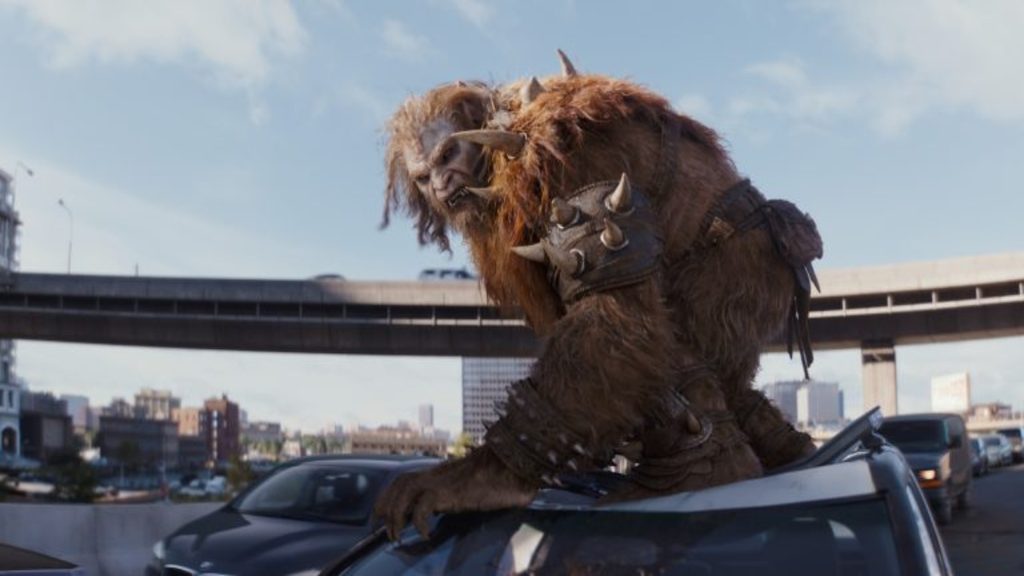
- On Beast Man and why motion capture got the boot
We tested motion capture and initially the results looked fine and realistic, but Beast Man had very specific proportions and was meant to have a strong simian, almost gorilla-like physicality. The motion capture didn’t quite give us that character.
So we removed it and allowed the animators to do what they do best: animate the character by hand.
A lot of the reference material actually came from the animators acting out the scenes themselves. They would physically perform the actions and use that as a reference for the animation. That gave the performance a very personal quality because they weren’t simply iterating on captured data.
We also took Beast Man on earlier than originally required and became heavily involved with the previs. That allowed us to develop the character and the asset much earlier, and it also helped establish the relationship with the client from the beginning.
- On Skeletor and how you make a skull talk and feel
Skeletor was incredibly challenging because you have a jaw that opens and closes, but you need to communicate all the emotion, intent and performance that normally comes from a much more flexible face.
We experimented a lot. We looked at how the jaw could move, how we could use the brows, how we could alter the teeth line and the shape of the mouth, and how we could approach dialogue when there are no lips to help shape the phonemes.
It became a very shot-by-shot process. Something might work beautifully in one shot and then completely fail in the next because the movement or framing was different. We had to keep experimenting until we found the right solution for each moment.
We also experimented with stepped or ‘on twos’ brow movement to bring in a little of that stop-motion quality. But again, it was about finding the balance. Push it too far, and the skull becomes rubbery or overly malleable; don’t push it enough and you lose the performance.
So there wasn’t one definitive solution for Skeletor. It really was about solving each shot individually.
By the power of Grayskull, the skull talks, the beast walks, and the hero grows before your eyes. ILM Mumbai and London made sure you believe every flex.
(Image credit: Amazon/MGM and Sony)
