
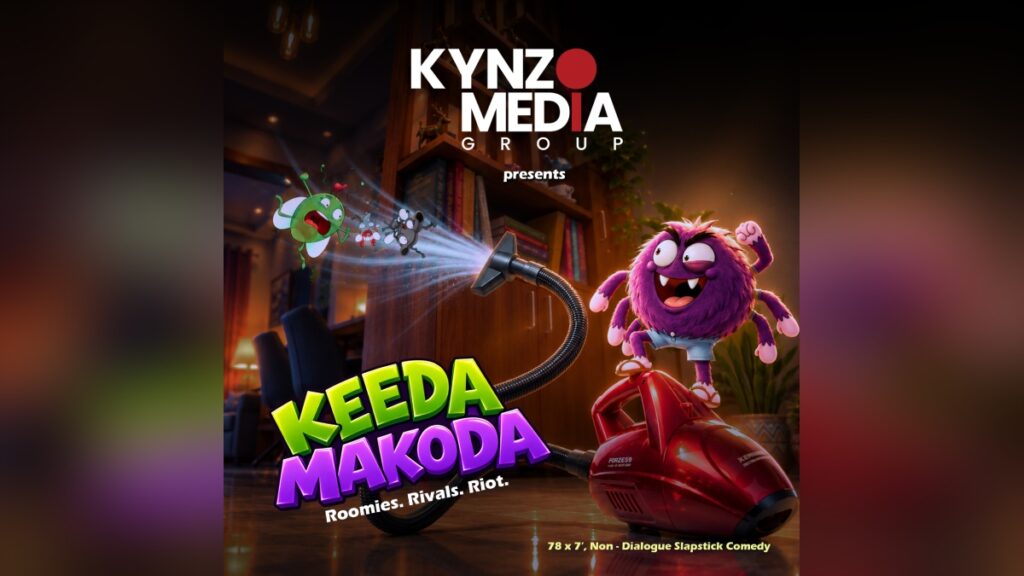
Jayakumar Prabhakaran Nair had spent more than two decades at Toonz Media Group, rising to CEO and taking Indian animation into international co-pros, partnerships and markets. He had stepped down late the previous year, founding the Kynzo Media Group in January 2026 and is headed to Cannes with original concepts and a clear brief: build the full ecosystem around content, not just the story.
Kynzo worked across content development and production, consultancy, distribution and franchise growth. Its consultancy arm partnered with IP owners on creative direction, business models and domestic or global deals. The content side developed, financed and produced animated and live-action for children and families across digital, TV and theatrical platforms, with a focus on feature films and branded digital-first series that carried consumer-products potential. Studio networks in India supplied the production muscle while partnerships handled financing, distribution and licensing.
Nair spoke with Nikita Kujur about the studio’s mission at Mipcom 2026 and its vision going forward. Excerpts:
On what Kynzo was bringing to Mipcom
Kynzo was a young company with an international outlook, building a slate of original concepts and projects developed with creative and commercial partners. We brought together development and production capabilities through our studio network in India, and a partnership-led approach to distribution and franchise building.
At Mipcom, we looked forward to introducing Kynzo and sharing selected projects in development. We were also keen to meet partners who could help us take projects forward, whether through co-production, financing, distribution or audience development.
Our focus was on building relationships that could support a project from its early creative stages through to its life in the market.
On the partners he wanted to meet
We welcomed conversations with international buyers, broadcasters, streaming platforms, distributors, producers and licensing partners. We were particularly interested in co-production and financing opportunities, as well as digital-first partnerships that could build audiences and create long-term value around content.
We were also open to working with IP owners seeking strategic support to grow their properties in India or internationally.
The most valuable partnerships aligned creative ambitions and commercial objectives, and each partner brought something meaningful to the project.
On budgets and production costs
Changing commissioning budgets and production costs called for careful planning from the earliest stages. We considered the format, target audience, platform, production scope and budget together, then shaped a suitable model for each project. This helped ensure creative ambition matched a realistic financing and distribution plan. Our studio network provided access to strong animation capabilities in India, while international partnerships could bring complementary creative input, financing and market access.
We believed flexibility was essential: the production approach should serve the story while keeping quality and commercial viability in view.
On getting Indian animation IP to travel
A global franchise needed more than a distinctive setting or visual style. It needed memorable characters and stories that connected emotionally across cultures, supported by thoughtful creative development and a clear understanding of the audience.
Indian stories could bring fresh perspectives and worlds to the global market, while universal themes helped make them accessible to viewers in different territories. International collaboration from an early stage could help projects travel while preserving the perspective that made them distinctive.
Digital platforms could also help a property find and build an audience, creating a foundation for wider distribution, licensing and consumer products.
On what would drive Indian growth
Growth would come from combining storytelling with dependable production capacity, global partnerships and stronger routes to market. India had talent and scale.
We needed to build on that through thoughtful development, sustainable financing and a focus on audience-building and IP. It would also be important to create business models that supported projects beyond initial production, including distribution, licensing and digital engagement. At Kynzo, we were working to bring all this together through a flexible, partnership-led model.
